Case Study
Catalog management shouldn't be a full-time job!
2PRICETAGS × AUTOBIZZ
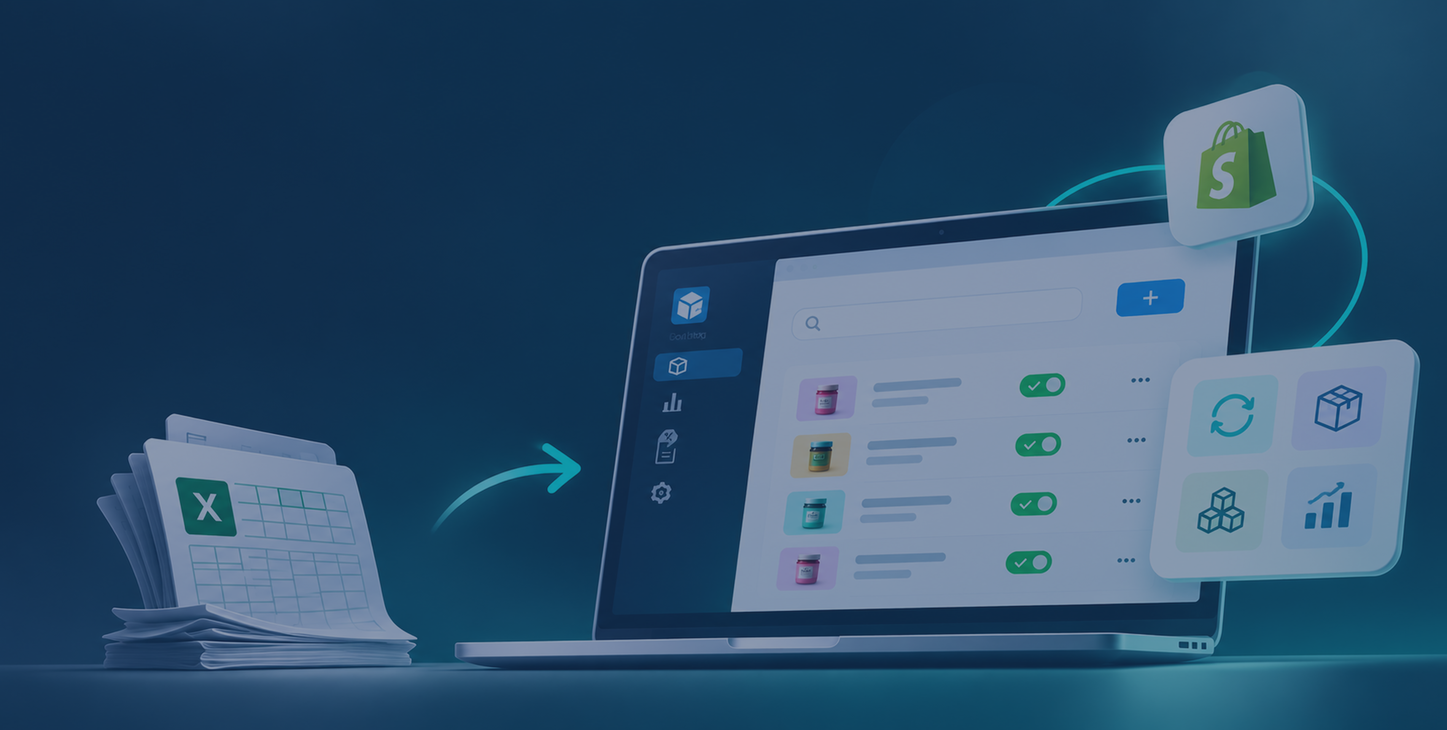
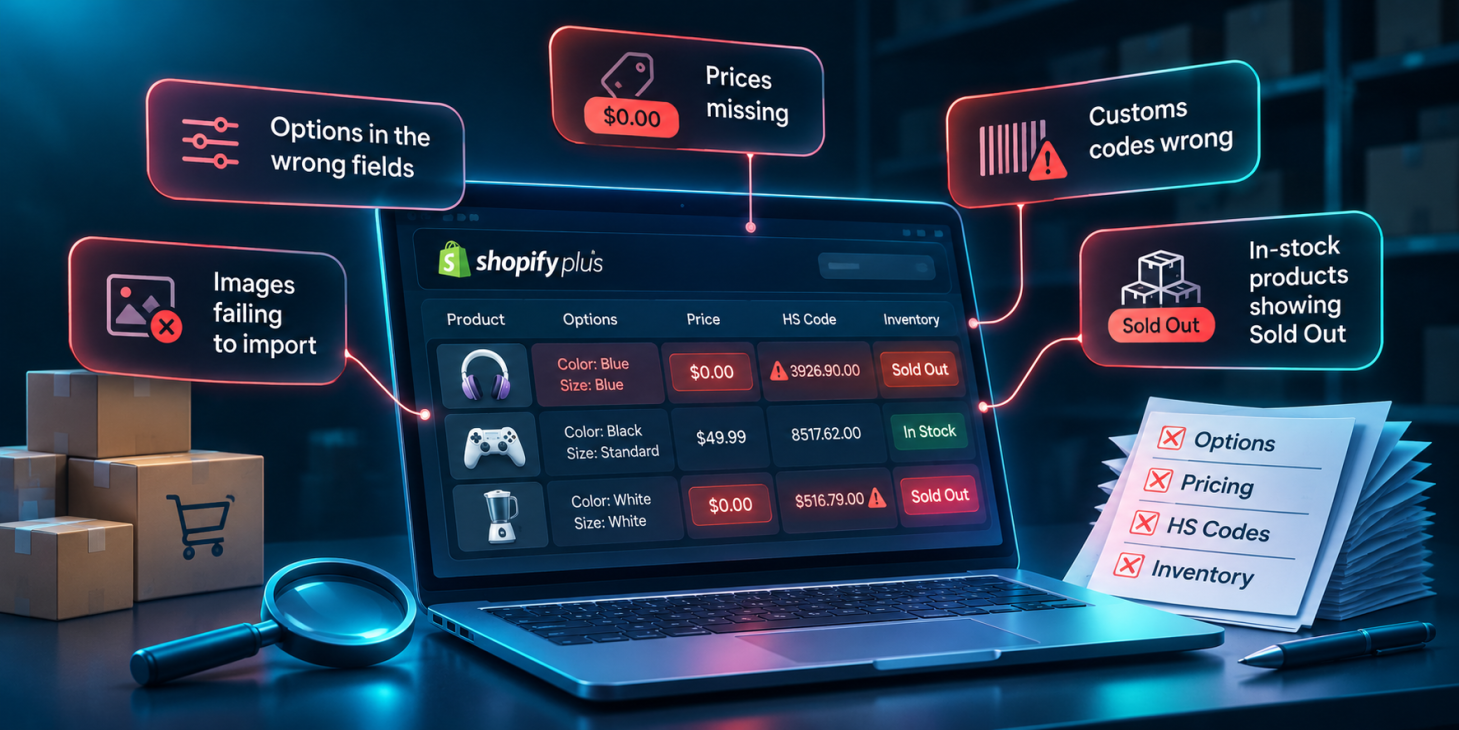
2pricetags was importing raw marketplace scrapes straight into Shopify Plus: options in the wrong fields, prices missing, customs codes wrong, in-stock products showing Sold Out. AutoBizz replaced the manual work with one connected pipeline that turns supplier data into import-ready listings.
“The Team can now trust the data to be well organized, complete and easy to make changes to”
Client
2Pricetags
Sector
E-commerce
Solution
Product Catalog Creation
Timeline
2025-2026
AutoBizz built 2PriceTags a catalog that maintains itself!
AutoBizz built an automated catalog operations system on Shopify Plus. A BigQuery process turns raw supplier data into complete listings, a landed-cost model reprices every product weekly, and a Python and Gemini LLM based process assigns customs codes against the official Bahamas tariff schedule. The result is 20,163 live SKUs with correct options, tags, prices and HS codes, and a documented procedure to repeat the steps for a new set of products.
- Shopify
- BigQuery
- SQL
- Python
- Gemini API
The Situation
Twenty thousand products, one manual process.
The catalog grew faster than the process behind it. Every new batch of supplier data meant fixing options, rebuilding tags, recalculating prices and hunting for customs codes by hand, and the knowledge of how to do it sat in one person's head.
Services We Provided
- Data Automation Engineering
- Pricing Automation
- AI Classification
- Hs Code Assignment
Old Routine
- 01Receive raw supplier scrapes with mixed-up options and no clean structure
- 02Re-map options, tags and categories by hand
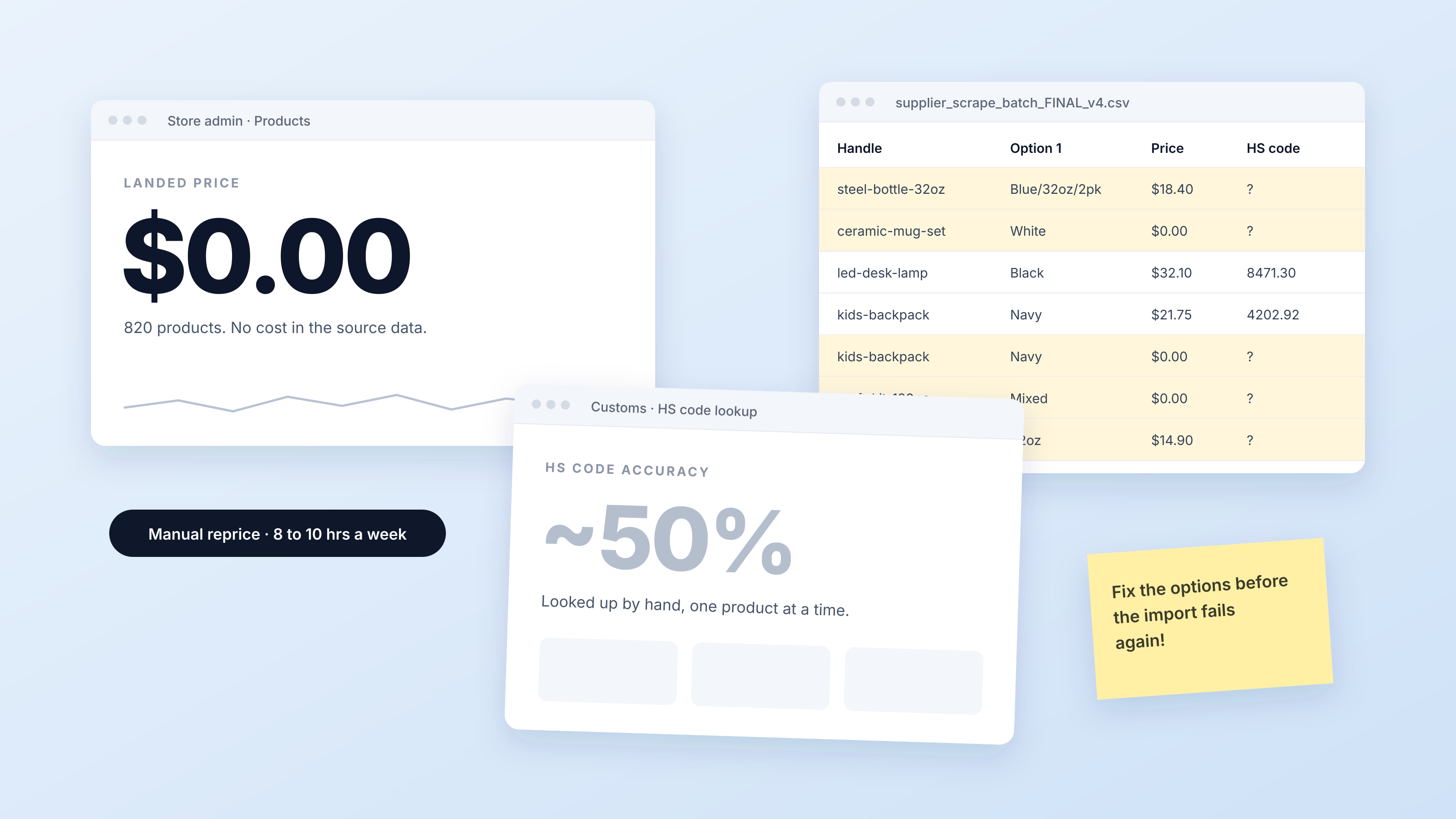
- 03Recalculate landed cost for every product, every week (8 to 10 hours)
- 04Look up an HS code per product, with roughly half of the existing codes wrong
- 05Build import files and fix whatever Shopify rejected
Individually, the steps were manageable. Together they meant days of data entry for every launch, and nobody on the team had time left to grow the catalog.
None of these problems threw an error. They just leaked revenue quietly.’
The Challenge
The errors weren't loud. They were expensive.
Each defect looked small on its own row. Across 20,000 products, they added up to lost sales, blocked imports and customs risk

- 1. Day zeroRaw supplier data lands with options in the wrong fields and prices missing.
- 2. Days laterIn-stock products show Sold Out and images fail to import. Nobody can say why.
- 3. Later still820 products sit at $0.00 in the data, one launch away from selling for free.
- 4. Too LateA wrong HS code changes the duty, the landed cost and the price, and creates customs risk.
- 5. Trust spentThe customer meets the error first: the wrong price, the wrong availability, a delayed clearance.
System Architecture
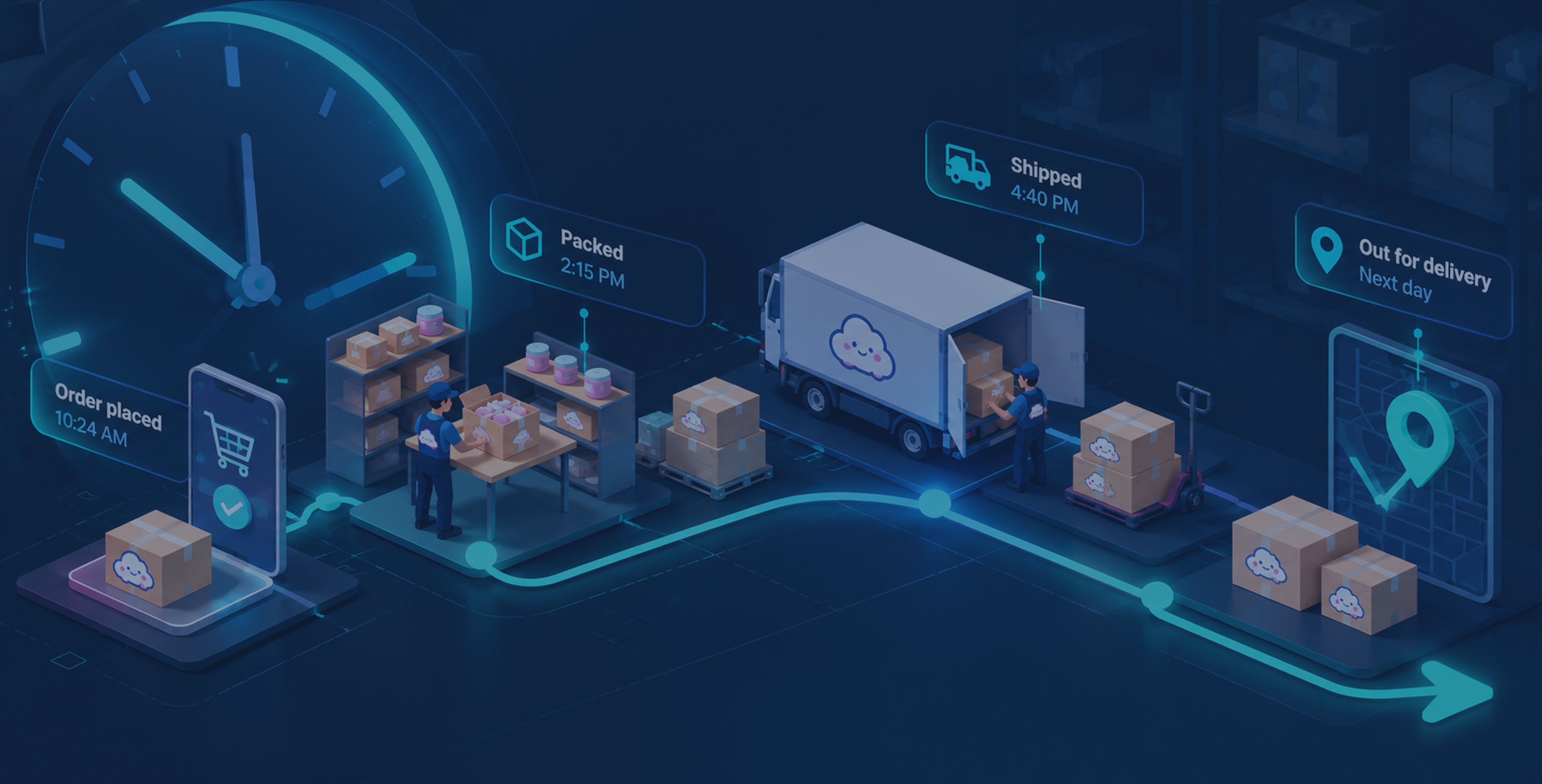
The Listing Process Board




SEE THE DELAY BEFORE IT BECOMES A CUSTOMER PROBLEM
The Turning Point
Automated catalog operations that work for people
2pricetags didn't need a cleaner spreadsheet. They needed a system that fixes defects at the data level, prices every product from the same model, assigns customs codes against the official source, and catches problems before they go live. We stopped the revenue leaks first, then built the machine, then handed it over.
The Solution
One process for the whole catalog
AutoBizz rebuilt catalog operations around one idea: remove manual work wherever a system can make the decision faster and more accurately.
01
The Repair Crew
Fixed false “Sold Out” flags, blocked image imports, misfiled options and junk tags.
02
The Listing Factory
SQL turns raw supplier data into complete Shopify listings. Nothing is typed by hand.
03
The Price Engine
Cost, freight, duty and fees feed one model. Vendor costs sync weekly and every price updates.
04
The Safety Net
Caught 820 products at $0.00 before launch. The check now runs on every pass.
05
The Customs Desk
Gemini matches each product to the Bahamas tariff and returns a code, a reason and a confidence score. Low scores go to manual review.
06
The Navigator
24 marketplace categories became 27 subcategories in 4 departments, tagged to bypass Shopify’s 500-product collection cap.
07
The Handover
Metafields, navigation, search and written SOPs, so the client’s team runs it.
What Changed
From manual upkeep to a self-running catalog
Before
Now
Before
In-stock products showed Sold Out
Now
Every live product is buyable
Before
Prices maintained by hand across 20,163 SKUs
Now
Weekly cost sync and automatic reprice
Before
HS codes roughly 50% accurate
Now
AI-assigned codes checked against the official tariff schedule
Before
Raw marketplace categories
Now
27 subcategories across 4 departments
Before
820 zero-price products hidden in the data
Now
Zero-price detection on every run
Before
The process lived in one person's head
Now
Written SOPs the client's team executes

The Results
Measurable improvements across the catalog
20,163
Catalog rebuilt
Every live SKU re-optioned, re-tagged, re-priced and given a valid HS code.
90%
HS code accuracy
Up from roughly 50%, measured against the official Bahamas tariff schedule.
820
Caught pre-launch
Zero-price products flagged before going live. Source data gaps, not free products.
300+
Hours saved per annum
Landed cost now recalculates automatically every week.
Recent Case Studies


References
Documentation this build relies on
- 01
- 02
- 03

Get Started
Ready to automate your catalog?
If your team is still fixing options, repricing by hand or guessing at customs codes, AutoBizz can turn that process into a connected, self-running process.
Frequently asked questions
Still have questions? Book a call and we'll answer anything.
Can AI assign HS codes accurately?
How does automated landed-cost pricing work?
Can it work around Shopify's 500-product collection limit?
Does it work for dropshipping stores on Shopify Plus?